Fascia: The Network Connecting Body, Mind and Movement
Oct 27, 2026
Exploring the science of connective tissue, the wisdom of Eastern medicine, and what happens beneath the surface when we practise Yoga asanas.
We Study Anatomy in Parts, but Experience the Body as a Whole
When we study Yoga anatomy, we learn about bones, joints, muscles, tendons and ligaments. We identify which muscles contract, which lengthen, and how the skeletal system supports us in different postures. This knowledge is essential for understanding movement and teaching Yoga safely. Yet, for many students, there can be a disconnect between the anatomy they study what they actually experience on the mat.
Consider Trikonasana / Triangle Pose. Anatomically, we can identify the joint actions and muscles involved, but our experience of the posture is rarely one of individual muscles working independently. Instead, we might notice a continuous sensation extending from the outer edge of the back foot, through the leg and hip, along the torso and towards the fingertips.
A subtle adjustment in the foot might change what we feel through the pelvis, while a deeper breath may create a sense of expansion through the ribcage. These sensations arise through the interaction of connective tissue, muscles, joints, sensory receptors and the nervous system. An important part of this relationship involves fascia.
Once understood primarily as tissue that surrounds and separates muscles, fascia is now recognised as an interconnected, sensory-rich component of the body's movement and communication systems. Its study helps us understand why the practice of yoga asanas is experienced as a whole-body practice rather than a series of isolated anatomical movements.
We study anatomy in parts, but we experience the body as a whole.
Understanding Fascia: The Body's Connective Tissue Network
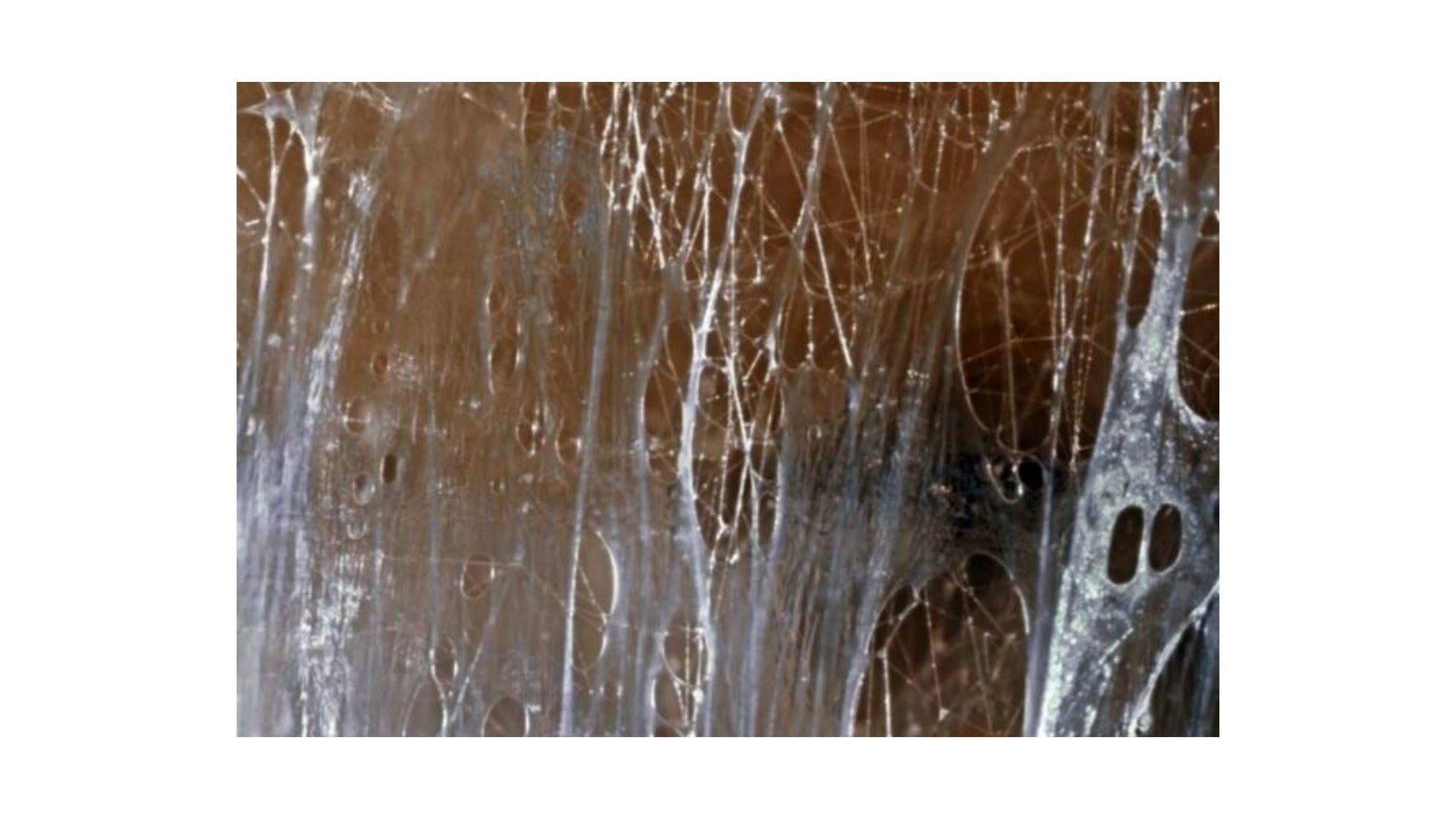
Fascia is connective tissue that surrounds, supports, separates and connects structures throughout the body. It includes layers beneath the skin, tissues surrounding muscles and muscle groups, and connective tissue associated with organs, nerves and blood vessels.
Fascia varies in structure and function. Some tissues are dense and fibrous, providing strength and stability, while others are more pliable, allowing neighbouring structures to move and glide.
At the microscopic level, fascia contains collagen fibres for strength, elastin fibres for elasticity, and specialised cells called fibroblasts that maintain and remodel the extracellular matrix. This matrix includes a hydrated ground substance containing molecules such as hyaluronan, which contributes to lubrication and tissue gliding. Fascia also contains sensory nerve endings that contribute to bodily perception.
Together, these components form tissue that responds to movement, loading and changes in its physiological environment.
Why Fascial Continuity Matters in Yoga
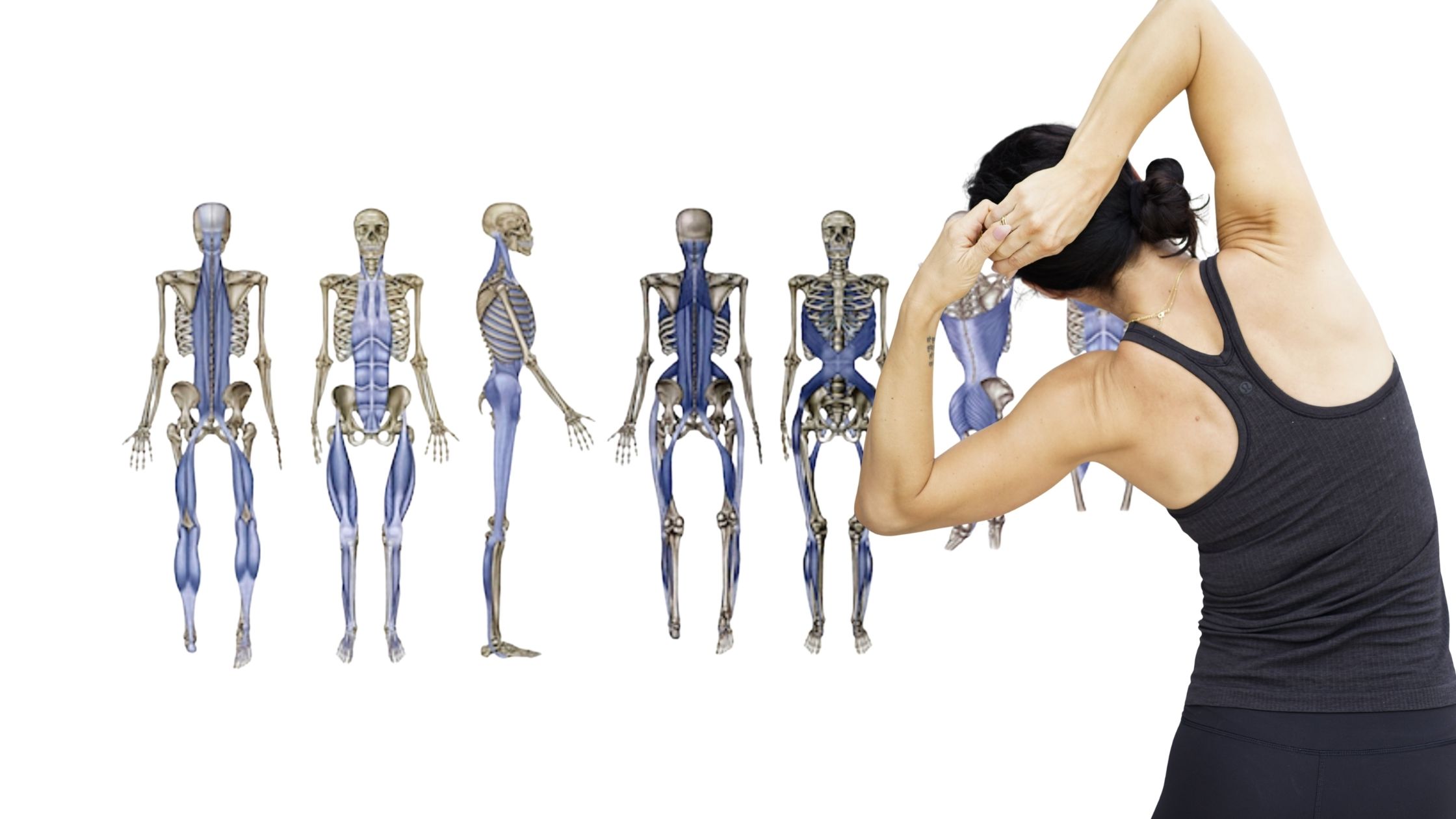
In conventional anatomy, we learn that the quadriceps extend the knee and the hamstrings contribute to knee flexion and hip extension. While accurate, these muscles do not function independently. Their fibres are supported by connective tissue, and the forces they generate are transmitted through tendons and surrounding structures.
This becomes apparent in Adho Mukha Svanasana / Downward-Facing Dog. The sensation through the back of the legs is not simply determined by hamstring length. The position of the ankles, knees, hips, pelvis and spine influences how forces are distributed, while sensory information from muscles, joints, skin and fascia shapes our experience of the posture. Fascia helps us understand these relationships, encouraging us to consider how the body works together rather than focusing exclusively on individual muscles.
Fascia as a Sensory Organ: Understanding What We Feel in Asana
One of the most interesting developments in fascial research concerns its sensory innervation. Several fascial structures contain substantial nerve endings, meaning fascia contributes not only to mechanical support but also to the body's sensory systems. When we practise asanas, we receive and interpret information about our position, movement and internal physiological state. Three concepts are particularly relevant.
Proprioception is our ability to sense the position and movement of the body without relying on vision. It allows us to balance, coordinate movement and make subtle adjustments. In Vrksasana / Tree Pose, sensory information from the feet, muscles, joints and connective tissues helps the nervous system maintain stability. Yoga gives us an opportunity to become more attentive to this process.
Interoception refers to our awareness of internal bodily signals, including breathing, heartbeat, fatigue and discomfort. This is particularly relevant to asanas, where we deliberately direct attention inward. Fascial tissues may contribute to aspects of internal sensory signalling, although interoception involves multiple tissues, neural pathways and brain regions rather than fascia alone.
Nociception is the detection of potentially harmful stimuli. Certain fascial structures contain nociceptive nerve endings and may contribute to musculoskeletal pain. However, pain is influenced by much more than tissue mechanics, including previous experiences, expectations, emotional state and nervous system processing. This helps explain why a sensation of tightness does not necessarily indicate that a tissue is physically shortened or damaged. It may also reflect muscular guarding, sensitivity or the nervous system's protective responses.
For Yoga teachers, this changes how we approach sensation. Rather than assuming every feeling of resistance indicates something that needs stretching, we can encourage students to investigate what they are experiencing. Does the sensation change when the posture is adjusted? Does reducing effort create more ease? How does the breath influence the experience? Anatomy helps us understand which structures are involved in a posture. Sensory awareness helps us understand how those structures are experienced.
What Happens to Fascia When We Practise Yoga Asana?
Yoga asana introduces mechanical forces into the body's tissues, including tension, compression and changes in pressure. Fascia responds according to its composition, mechanical properties and physiological condition. Some responses occur immediately, while others develop gradually through repeated movement, loading and recovery.
Mechanical Loading and Tissue Adaptation
When muscles contract, forces are transmitted through their connective tissues and associated tendons. This is particularly relevant in whole-body postures such as Virabhadrasana II / Warrior II, where the feet, legs, pelvis, spine and shoulders work together to maintain stability. Small adjustments can change how these forces are distributed. Repositioning the front knee may influence loading through the hip, while adjusting the pelvis can alter muscular effort through the torso.
Fascia also demonstrates viscoelasticity, meaning its mechanical behaviour depends partly on the amount and duration of loading. This includes processes known as creep, where tissue gradually deforms under sustained load, and stress relaxation, where internal stress decreases while tissue is held at a relatively constant length. These properties are relevant to held yoga postures, but they do not mean that holding a stretch automatically produces permanent fascial lengthening. Changes in sensation may also reflect muscular activity, stretch tolerance and nervous system responses.
Fascia responds to more than stretching. Appropriately dosed strength training, weight-bearing movement and repeated mechanical loading can influence connective tissue adaptation over time.
A balanced asana practice therefore benefits from a combination of movement, strengthening, sustained postures and adequate recovery, rather than focusing exclusively on flexibility and stretching.
A Practical Example: Rethinking the Forward Fold
In Uttanasana / Standing Forward Fold, we might traditionally focus on hip flexion and hamstring length. However, a more integrated approach also considers the position of the feet, knees, pelvis and spine, alongside muscular effort and sensory feedback. Slightly bending the knees may create greater ease through the lower back, while reducing effort may change the intensity of the stretch. Moving slowly into the posture may also produce a different experience from entering it quickly.
These examples demonstrate how anatomical understanding and sensory awareness can work together to create a more responsive practice.
Cellular Intelligence: How Fascia Responds to Movement
Fascial cells actively maintain and remodel their surrounding environment. Fibroblasts, for example, produce collagen and other components of the extracellular matrix and respond to mechanical forces through a process called mechanotransduction. Mechanotransduction occurs when cells convert mechanical stimuli, such as tension or compression, into biochemical signals. These signals can influence cellular activity, gene expression and tissue remodelling.
In simple terms, cells respond to the physical conditions in which they exist.
The phrase cellular intelligence is sometimes used to describe this responsiveness. While cells do not possess conscious thought, their ability to detect and respond to environmental changes demonstrates their programmed 'intelligence' - a sophisticated regulatory processes occurring within living tissues.
For yoga practitioners, this offers another perspective on movement. The forces generated through asana become part of the mechanical environment experienced by connective tissue cells. Over time, appropriately dosed loading may contribute to tissue adaptation. Much of the detailed research into mechanotransduction comes from laboratory and broader exercise studies, so we can't attribute specific cellular outcomes to individual yoga postures. Nevertheless, it reinforces an important principle: movement is not simply something we do with the body. It is also something to which the body's tissues continually respond and adapt.
Fascia, Hydration and Tissue Gliding
Water is an essential component of fascia's extracellular matrix, the network of structural and biochemical materials surrounding its cells. One important molecule within this environment is hyaluronan, also known as hyaluronic acid. Hyaluronan interacts with water and contributes to tissue lubrication, hydration and cellular signalling. In certain fascial interfaces, it helps neighbouring tissue layers glide over one another. This is important because movement depends not only on tissues tolerating tension but also on their ability to slide and move relative to surrounding structures.
Researchers have investigated how changes in hyaluronan and other extracellular matrix components may influence tissue gliding and contribute to musculoskeletal symptoms. However, this remains an evolving field, and the relationship between fascial properties and sensations such as stiffness or pain is complex.
Does Asana Hydrate Fascia?
Movement can influence tissue fluid dynamics, circulation and the mechanical environment of the extracellular matrix. However, there is insufficient evidence to claim that particular yoga postures directly pump water into fascia, flush toxins or permanently restore tissue hydration. Similarly, drinking additional water beyond normal physiological requirements has not been shown to resolve fascial restrictions in adequately hydrated individuals.
The practical message is straightforward: connective tissue health is supported by regular movement, appropriate loading, and adequate hydration, nutrition and recovery.
Rather than imagining fascia as a dry sponge that needs soaking, we can understand it as a living, hydrated tissue whose properties are continuously regulated by cellular activity and mechanical conditions.
Fascia, Qi and the Meridians of Traditional Chinese Medicine
Traditional systems of medicine have long described the body through models of interconnectedness. Traditional Chinese Medicine (TCM) describes Qi as a fundamental concept associated with physiological activity, movement and regulation. Meridians, or channels, form part of the traditional model through which Qi is understood to circulate and connect different aspects of bodily function.
Yoga and Ayurveda similarly describe Prana as fundamental to life, with Nadis representing channels associated with the movement and organisation of Prana within the subtle body.
Although these traditions developed within different philosophical contexts, both offer perspectives on the human body that extend beyond isolated anatomical structures.
What Does Modern Research Suggest?
In 2002, researchers Helene Langevin and Jason Yandow investigated the relationship between acupuncture points, meridians and connective tissue planes. Examining anatomical sections of the human arm, they found that approximately 80% of the acupuncture points studied corresponded with connective tissue planes. The researchers proposed that acupuncture meridians might, at least in part, correspond to the organisation of interstitial connective tissue.
Further research by Langevin and colleagues demonstrated that acupuncture needle rotation can mechanically interact with surrounding connective tissue, suggesting one possible mechanism through which needling produces physiological stimulation.
Similarly, Prana should not be reduced to oxygen, electrical activity or the nervous system, and the Nadis should not automatically be equated with anatomical structures. What this research offers is an interesting point of conversation between traditional models of bodily interconnectedness and contemporary anatomical science. Both can contribute to our understanding without requiring one to validate or replace the other.
Fascia and the Mind–Body Connection
Many asana practitioners have experienced how the same posture can feel entirely different from one day to the next. A forward fold that feels comfortable in the morning may feel resistant in the evening, while a familiar restorative posture may feel uncomfortable during a period of stress. These changes cannot always be explained by the mechanical condition of the tissues.
The nervous system continuously processes information from the body, integrating signals related to movement, pressure, internal physiological conditions and potential threats. Our experience of these signals is influenced by attention, expectations, previous experiences and emotional state. This means that sensations such as tightness or resistance are not always direct measurements of tissue length or tension. They may also reflect muscular guarding, changes in sensitivity or the nervous system's protective responses.
Psychological stress can influence breathing, muscular activity, autonomic nervous system function and pain sensitivity. Because fascia is integrated with surrounding tissues and sensory pathways, it participates in this broader physiological environment.
Why Attention Changes the Experience of Asana
One of Yoga's distinctive features is the deliberate cultivation of attention. Rather than simply performing movements, we observe our breathing, sensations and responses.
Imagine holding a gentle seated twist. Initially, you might experience strong resistance through the back or ribcage. By reducing the range of movement, softening unnecessary muscular effort and observing the breath, the posture may begin to feel different. This doesn't necessarily mean fascia has released or an emotional blockage has been removed. The change may reflect altered mechanical loading, muscular activity, sensory processing and attention.
Understanding these processes can deepen our appreciation of mindful movement.
Interoceptive awareness also has practical value beyond the yoga mat. Recognising early signs of fatigue, noticing when breathing becomes restricted, or identifying when effort becomes excessive can support more informed choices throughout daily life.
However, greater sensitivity to bodily sensations is not always beneficial. For individuals experiencing anxiety, chronic pain or heightened bodily vigilance, increased internal attention can sometimes become uncomfortable. The aim is therefore not to maximise sensation, but to develop a balanced relationship with it.
The value of mindful movement is not only that the body may change, but that our relationship with our body may become more attentive, informed and responsive.
Applying Fascial Science to Hatha Yoga
Understanding fascia doesn't mean abandoning conventional anatomy or interpreting every sensation as the movement of energy. Instead, it encourages us to broaden how we approach movement, alignment and sensory awareness.
When practising Trikonasana / Triangle Pose, for example, we can explore how adjusting the feet, pelvis or arms changes the experience of the posture. Rather than searching for one universally correct alignment, we begin to recognise how different positions create different mechanical and sensory responses.
A balanced practice also includes both dynamic movement and sustained postures. Dynamic movements develop coordination and expose tissues to changing loads, while sustained positions provide opportunities to observe how the body responds over time. Strengthening, weight-bearing movement and adequate recovery remain important for maintaining healthy connective tissues.
Breathing offers another valuable point of exploration. The diaphragm, ribcage and abdominal wall work together during respiration, influencing torso mechanics, muscular activity and aspects of autonomic regulation. Observing the breath during asana can help us recognise unnecessary effort and adjust our practice accordingly.
Perhaps most importantly, understanding fascia encourages us to reconsider our relationship with sensation. A stronger stretch does not necessarily produce a "better" result, and discomfort does not always indicate that something needs to be released. Instead of forcing the body into a predetermined shape, we can approach each posture with curiosity. Small adjustments, slower transitions and a willingness to reduce effort may reveal more value than repeatedly pursuing greater flexibility.
The purpose is not to become preoccupied with every tissue beneath the skin. It's to develop a more complete understanding of the body so that movement becomes increasingly informed, appropriate and conscious.
From Understanding the Body to Experiencing It
The study of yoga anatomy often begins with memorising structures: muscles, bones, joints and connective tissues. This knowledge is valuable, but it represents only one dimension of understanding the body. When we practise asanas, we experience movement through an ongoing exchange of sensory information, physiological responses and conscious awareness. Fascia contributes to this relationship through its structural continuity, cellular responsiveness and sensory innervation.
A muscle does not function independently of its connective tissues. Movement is not experienced independently of the nervous system. And the experience of a posture cannot be fully explained by identifying its joint and muscle actions alone.
The next time you enter an asana, begin by noticing the familiar anatomical landmarks: the position of your feet, the movement of your hips and the activity of your muscles. Then broaden your attention. Notice how one adjustment influences another part of the body, how breathing affects your experience, and how sensations change without necessarily needing to be corrected. In doing so, you bring anatomical understanding into conversation with direct, felt experience.
References and Further Reading
Langevin, H. M., & Yandow, J. A. (2002). Relationship of acupuncture points and meridians to connective tissue planes. The Anatomical Record, 269(6), 257–265. https://doi.org/10.1002/ar.10185
Langevin, H. M., Churchill, D. L., Wu, J., Badger, G. J., Yandow, J. A., Fox, J. R., & Krag, M. H. (2002). Evidence of connective tissue involvement in acupuncture. The FASEB Journal, 16(8), 872–874. https://doi.org/10.1096/fj.01-0925fje