My Clients Weren't Getting The Results I Knew Were Possible
Oct 12, 2026
The story behind Live to Serve Academy's flagship certification, and why I believe wellness coaching has such an important role to play in making Ayurveda accessible, practical and sustainable.
This year marks ten years since I launched Ayurvedic Wellness Coaching through Live to Serve Academy, and I recently realised that I've never really shared the story of how it came about!
Back in 2016, Ayurvedic Wellness Coaching was a relatively new concept. There were established pathways to study Ayurveda and become an Ayurvedic health counsellor, practitioner or doctor, but I couldn't find a certification that brought together traditional Ayurvedic knowledge and the professional skills of wellness coaching.
And there was a very specific reason I wanted to bring these two disciplines together.
I'd been working with clients one-on-one for several years, drawing on my training in personal training, yoga and Ayurveda. I was absolutely fascinated by Ayurveda and its potential to help people understand their health and make lifestyle changes. But I was also becoming increasingly frustrated by something I kept encountering in my practice.
It didn't matter how good my recommendations were, how thoughtfully I'd put together a program, or how much a client understood and appreciated the guidance I was offering them. If they couldn't actually implement it, how much was it really helping them?
I could see that many people needed more than information and prescriptions. They needed help working out how to take that information and make it part of their lives.
From Ayurveda to Psychology, and Eventually Wellness Coaching
My first thought was that I needed to study psychology.
After all, the challenge seemed to be somewhere between the mind and behaviour. My clients generally understood what they needed to do, and many genuinely wanted to make changes, but there was something getting in the way of following through.
So I enrolled in a psychology degree.
I completed a semester before realising that, while psychology was fascinating, it wasn't quite what I was looking for. I wasn't trying to become a psychologist. I wanted to become better at helping people work through the practical, emotional and behavioural challenges involved in changing their lifestyle.
At the time, I wasn't particularly familiar with the coaching industry. Personal development coaching, business coaching and all the different coaching specialisations weren't on my radar.
But I'd grown up as a gymnast, and coaching was something I understood very well.
Throughout my childhood, I'd always had a coach in my corner. Someone who could observe where I was at, understand what I was working towards, identify the skills I needed to develop, and help me progressively build towards them.
If I was learning a new gymnastics skill, my coach didn't simply demonstrate it, explain the technique and send me away to figure it out for myself. We worked together. We broke the skill down, identified the areas that needed attention, practised, reviewed and adjusted the approach as I progressed.
And of course, different gymnasts needed different things. Some needed more confidence, others needed strength, flexibility, repetition or a different way of approaching a particular skill.
I began thinking about how valuable this kind of relationship could be in the context of health and wellbeing.
What if we approached lifestyle change in a similar way? What if, instead of simply providing people with a plan, we worked collaboratively to understand their goals, identify the obstacles and build the skills they needed to make progress at a pace that was appropriate for them?
I started researching wellness coaching, found a few professional certifications and immediately recognised that this was the missing piece I'd been looking for.
How Wellness Coaching Changed My Practice
After completing my coaching studies, I began integrating wellness coaching methodologies into my existing Ayurveda and yoga services.
One of the biggest changes was moving away from a consultation-by-consultation approach and towards longer-term coaching relationships, typically working with clients over three to six months.
This gave us time to do something that I felt was missing from many conventional approaches to Ayurveda: actually work through the psychological process of change together.
Rather than sending someone home with a long list of recommendations and hoping they'd manage to implement them, we could explore what was realistic, identify their priorities, establish small achievable goals, and work through the inevitable challenges as they arose.
And those challenges weren't always what you might expect.
Sometimes a client understood exactly why a particular practice would benefit them but simply couldn't find the time to do it. Sometimes they had a complicated relationship with food, struggled with consistency, or were trying to make changes within a family environment that didn't necessarily support them.
Other times, we discovered that the original goal wasn't actually the deeper, most important or motivating place to begin.
I also want to acknowledge that many Ayurvedic doctors and practitioners already offer this level of personalised, ongoing care, and traditionally, this close relationship between practitioner and patient is very much part of Ayurveda. However, within modern healthcare settings, the time and resources required to provide this level of support aren't always available. This is where Ayurvedic Wellness Coaches and Counsellors can play such a valuable role, working alongside practitioners to help clients understand, implement and sustain their lifestyle recommendations. It's not about replacing the work of Ayurvedic doctors or practitioners, but complementing it and helping people receive the ongoing education, encouragement and practical support they need.
With coaching, you're not simply delivering information. You're working with the person, with their own history, beliefs, responsibilities, habits and aspirations. You have to listen carefully, ask good questions, think creatively and sometimes completely reconsider the approach you thought would be most helpful.
I found this work incredibly rewarding, and it also transformed my business.
As a yoga teacher and mother, I was able to build longer-term relationships with clients, offer a more comprehensive service and develop a business model that wasn't entirely dependent on teaching more classes or booking more individual appointments.
It also opened my eyes to the opportunities that wellness coaching could offer other yoga teachers and holistic health professionals.
Why I Wanted to Train Other Ayurvedic Wellness Coaches
Something I've always felt strongly about is that yoga teachers have so much knowledge to share, but the conventional group yoga class offers relatively little opportunity to explore and share it with students.
Think about everything we study in yoga teacher training: philosophy, lifestyle, ethics, meditation, the mind, the body, our relationship with the senses, and the practices that help us cultivate greater awareness and wellbeing.
And then think about how much of that knowledge we can realistically share in a 60-minute group class. There's only so much time, and naturally, much of it is devoted to guiding people through their physical practice. Ayurveda provides a wonderful opportunity to expand that conversation.
Yoga and Ayurveda share philosophical roots, and together they offer a comprehensive approach to understanding ourselves and how we live. Ayurveda gives us practical frameworks for exploring our daily habits, digestion, sleep, energy, mental qualities, environment and relationship with nature.
Wellness coaching gives us a way to bring that knowledge into an individualised, ongoing conversation.
I could see an opportunity for yoga teachers and other wellness professionals to expand their services beyond the group class, develop more sustainable professional offerings, and support people in embracing the lifestyle aspects of yoga and Ayurveda.
That was the inspiration behind developing Ayurvedic Wellness Coaching as a certification through Live to Serve Academy in 2016.
Ayurveda Is About Understanding Principles, Not Following Rules
One of the things I'm particularly passionate about is helping people understand the principles of Ayurveda rather than becoming overly attached to prescribed routines, diets or lifestyle plans.
Over the years, I've encountered plenty of people who have become quite disheartened by Ayurveda because they feel they aren't doing it properly.
Perhaps they've been told to avoid certain foods, eat at particular times, follow a lengthy morning routine or make changes that simply don't fit their lifestyle.
They might manage it for a few weeks, perhaps even feel wonderful, but eventually life happens and they find themselves back where they started.
And sometimes they walk away believing Ayurveda just isn't for them.
I think that's such a shame, because Ayurveda has so much more to offer.
During my studies with Atreya, one of the things I appreciated was his approach to helping people apply Ayurvedic principles within their own cultural and dietary traditions.
For example, someone living in Europe doesn't necessarily need to abandon the foods they've grown up eating and start consuming dal every day to live Ayurvedically.
They can learn about the qualities of foods, how preparation influences those qualities, how different foods affect their digestion, and how to make adjustments that are appropriate to their constitution, environment and circumstances.
Perhaps they love salads. Rather than insisting they never eat another raw vegetable, we can explore how the meal might be adapted, what other foods could accompany it, or whether particular preparations are more suitable for them.
It's generally an intelligent and empowering way to approach health.
What makes a decision Ayurvedic isn't necessarily that you're eating a particular food or following a particular routine. It's that you're learning to consider the qualities, influences and circumstances involved, and make decisions with greater awareness and intelligence.
This is one of the things I love most about Ayurveda. The principles are relevant to everyone, but their application can look quite different from one person to another.
And it's also where wellness coaching fits so naturally.
We're helping people learn to think for themselves, observe their experiences, understand the reasoning behind recommendations and gradually develop the capacity to make informed decisions independently.
The Psychology of Change Is Part of the Work
There's another important consideration here, and it's something that becomes very apparent once you start working with people over an extended period.
Changing our habits is not always easy, even when we're completely convinced of the benefits.
Someone might love the idea of meditation, understand the importance of regular meals, or recognise that their current lifestyle is contributing to stress and exhaustion. They may even be enthusiastic about making changes.
But then comes the actual work of putting those changes into practice.
Finding the time. Working through resistance. Changing established behaviours. Managing competing responsibilities. Learning to respond differently when life becomes difficult.
Sometimes a person needs practical strategies. Sometimes they need encouragement or accountability. Sometimes they need to spend time understanding why a particular change feels so difficult in the first place.
And sometimes they simply need permission to start smaller.
Wellness coaching draws on behaviour change principles, reflective enquiry, goal setting and ongoing support to help people work through these challenges.
It also encourages us to recognise that meaningful change often takes time.
I think this is particularly important in Ayurveda, where lifestyle recommendations can involve several aspects of someone's day. If we expect a person to change their diet, sleep, exercise, meditation practice and daily routine all at once, we may be setting them up for an experience that feels overwhelming rather than empowering.
A good coach can help someone identify where to begin, what is realistic for them, and how to build on their progress over time.
And ultimately, that's what we're interested in: not whether someone can follow a perfect routine for a fortnight, but whether they're developing the understanding, confidence and skills to support their wellbeing over the long term.

The Importance of Having Someone in Your Corner
This is also something I understand from my own experience.
My interest in Ayurveda originally developed during a period when I was working through significant health challenges, including recovery from an eating disorder and the behaviours and habits associated with it.
I know what it's like to understand that you need to make changes, genuinely want to make them, and still find yourself struggling in the moment.
And I remember how difficult it could be to have an appointment with a practitioner, leave feeling motivated and supported, and then find yourself dealing with a challenge several days later, knowing your next appointment was still a week away.
That experience has stayed with me.
One of the things I value about a longer-term coaching relationship is the opportunity to offer support throughout the process, rather than limiting the relationship to occasional consultations.
Depending on how a coaching program is structured, that might include regular check-ins, reflection exercises, progress reviews, messaging support or additional conversations when someone needs help working through a particular challenge.
There can be so much value in having someone who understands what you're working towards, knows the broader context of your life, and can help you reflect, problem-solve and regain perspective when things become difficult.
Of course, wellness coaching isn't a replacement for medical or psychological care, and professional boundaries are essential. But within its scope, coaching can provide a valuable layer of education, encouragement and practical support.
It's a relationship that can help people feel less alone in the process of making changes, while gradually building their confidence and independence.
Ten Years of Ayurvedic Wellness Coaching
Looking back, I'm grateful that the challenges I experienced in my early practice led me to explore wellness coaching and eventually develop this training.
What began as an attempt to become more effective in my own work has grown into a professional education pathway for women who want to deepen their understanding of Ayurveda, support others and potentially develop their own coaching services.
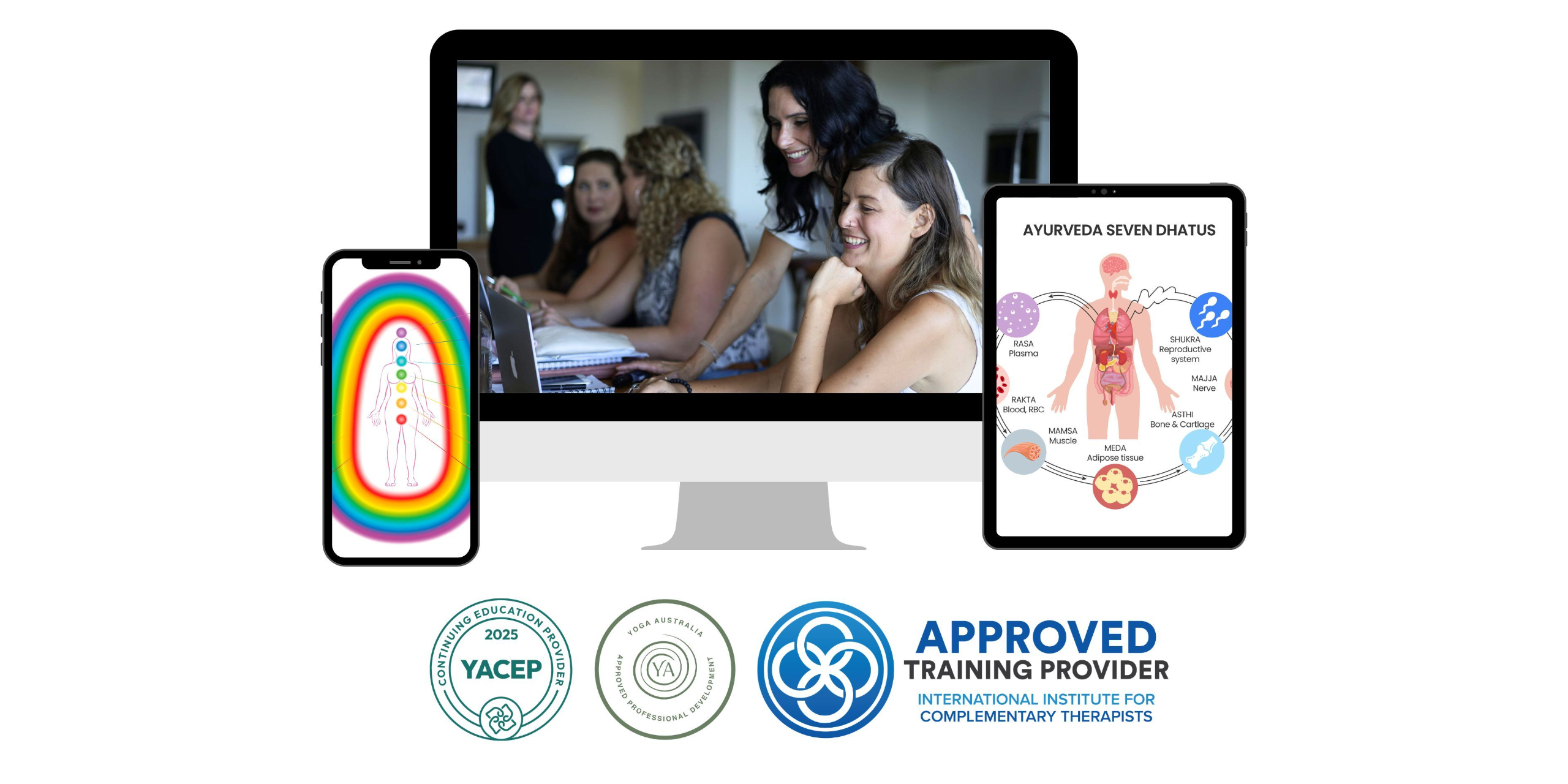
Our Ayurvedic Wellness Coaching certification is now registered with Yoga Australia and the International Institute for Complementary Therapists, and is recognised as continuing education with Yoga Alliance.
The training brings together traditional Ayurvedic principles, lifestyle education, coaching methodologies and practical professional skills, including developing coaching programs, working with clients, and providing ongoing support and accountability.
But one of the things I appreciate most is that the knowledge and skills are just as relevant to personal life as they are to professional practice.
Learning to observe our habits, understand the influences on our mind and body, communicate more effectively, support behaviour change and make thoughtful decisions are skills that extend into our relationships, parenting, work and everyday life.
And that's really what I wanted this training to offer from the beginning.
Not another collection of information to memorise, or another set of lifestyle rules to follow, but an opportunity to develop a deeper understanding of Ayurveda and learn how to apply that knowledge in a way that is practical, relevant to modern living, and sustainable.
Ten years on, I still believe there's an important place for Ayurvedic Wellness Coaching within the broader landscape of holistic health and wellbeing.
And I'm looking forward to seeing where the next decade takes us.
Study Ayurvedic Wellness Coaching with Live to Serve Academy
Our next eight-week Ayurvedic Wellness Coaching live intensive begins in January 2027, facilitated by practising Ayurvedic Wellness Coach Steffi, with additional mentoring and practical workshops from me.
The training is delivered online and combines flexible study with live learning, practical application and professional mentoring.
Whether you're interested in Ayurveda for your own personal development, you're a yoga teacher wanting to expand your services, or you're considering a career in holistic wellness coaching, we'd love to welcome you.
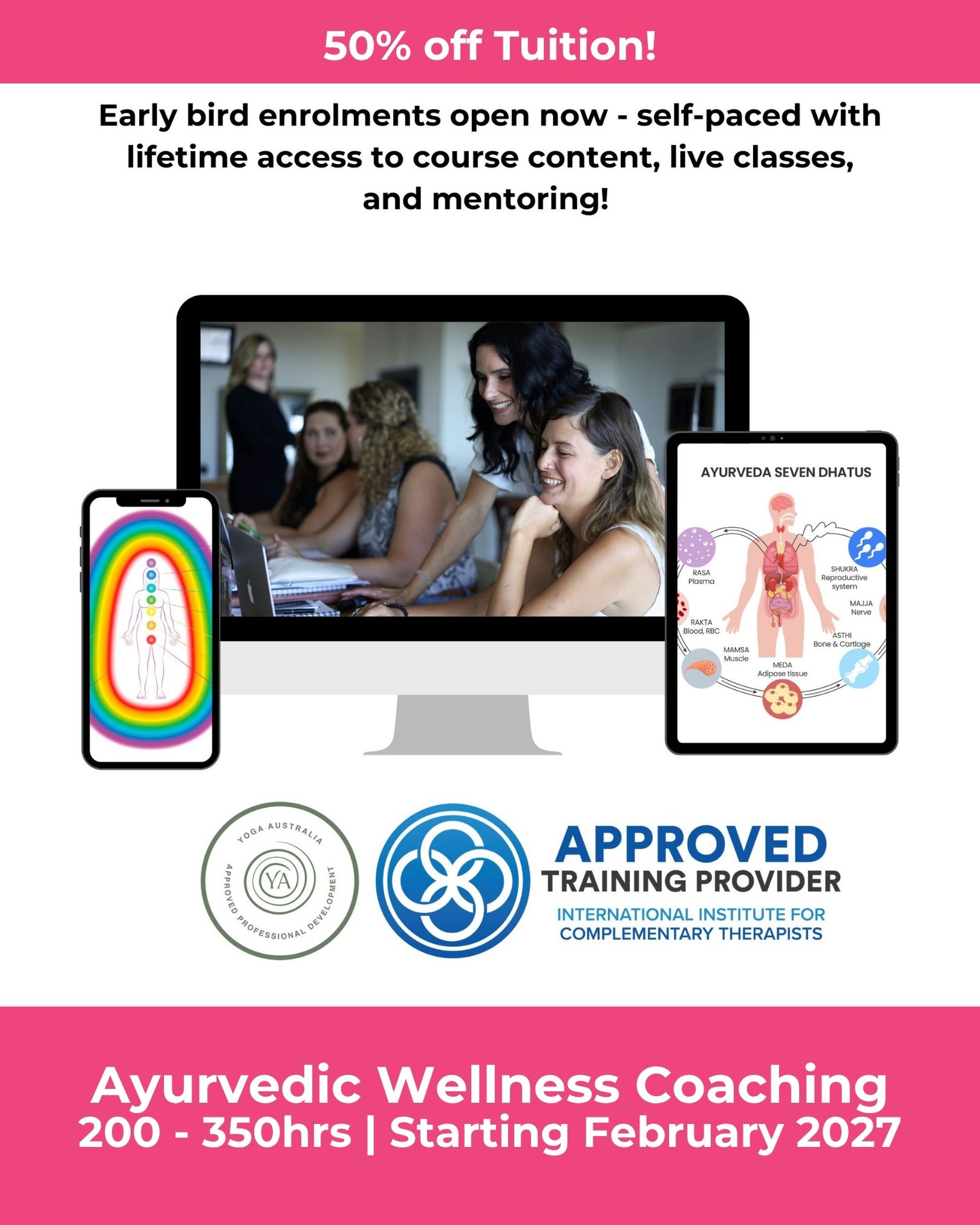
Our 10-year anniversary Early Bird offer is now open, with 50% off Ayurvedic Wellness Coaching enrolments until 31 October 2026.
Explore the certification, download the course brochure or get in touch if you'd like to discuss whether the training is right for you.