Ayurveda and Yoga for ADHD
Mar 17, 2026
A holistic approach to attention, regulation and mental clarity
Attention is one of our most valuable inner resources. It shapes how we learn, how we relate, and how we experience the world.
In recent years, ADHD has become one of the most widely discussed and diagnosed conditions. For many, medical support plays an important role. At the same time, there is a growing recognition that attention is not only a neurological function, it is deeply influenced by the state of the nervous system, the quality of our lifestyle, and the environment we live within.
This is where Ayurveda and Yoga offer a broader, more integrated perspective.
Understanding ADHD through an Ayurvedic lens
In Ayurveda (and yoga), the mind is not separate from the body. Attention, memory, emotional regulation and behaviour are all shaped by the interplay of the doshas, the state of digestion (agni), and the quality of the nervous system.
ADHD-like patterns are often associated with an aggravation of Vata dosha, the principle of movement. When Vata is balanced, it supports creativity, adaptability and quick thinking. When disturbed, it can present as:
- Restlessness and constant movement
- Difficulty sustaining attention
- Impulsivity
- Irregular energy and sleep patterns
- Heightened sensitivity to sensory input
From this perspective, attention challenges are not simply a deficit, they are a reflection of excess movement and instability within the system. The aim is not to suppress this energy, but to carefully guide it towards steadiness, while channeling the goodness of it intro healthy, constructive activities.

The role of the nervous system and sensory input
One of the most practical and often overlooked aspects of ADHD is sensory input management. Ayurveda teaches that the mind is constantly shaped by what we take in through the senses - what we see, hear, taste, touch and engage with throughout the day. Fast-paced environments, constant screen exposure, overstimulation and irregular routines all increase Vata and place additional demand on the nervous system. Over time, this can reduce the capacity for sustained attention.
A key principle in Ayurvedic psychology is therefore not just ‘focus harder,’ but: create an environment that supports focus.
This includes:
- Simplifying and reducing sensory overload
- Establishing consistent daily rhythms
- Creating calm, predictable spaces
- Encouraging time in nature
- Supporting deep, regular rest
These may seem like overly simple things, but they have a profound cumulative effect.
Sattva, Rajas and Tamas: the qualities of the mind
Ayurveda describes three core qualities of the mind:
Sattva – clarity, calmness, balance
Rajas – activity, stimulation, restlessness
Tamas – heaviness, dullness, inertia
ADHD presentations often involve an excess of rajas > a mind that is constantly active, stimulated and pulled outward. Yoga and Ayurveda work not by suppressing this, but by gradually cultivating sattva. This is done through all the points previously mentioned. As sattva increases, attention becomes more stable, and the mind gains the capacity to rest/focus in one place.
A sattvic approach to diet and lifestyle
Food plays a direct role in mental clarity. A sattvic diet emphasises fresh, simple, nourishing foods that are easy to digest and support a calm, steady mind. Warm, cooked meals, healthy fats, regular meal times and adequate hydration all help stabilise Vata and support consistent energy.
Lifestyle rhythm is just as important. Regular sleep, consistent daily structure and predictable routines create a sense of safety in the nervous system, which in turn supports attention.
Yoga asanas as a practice of regulation
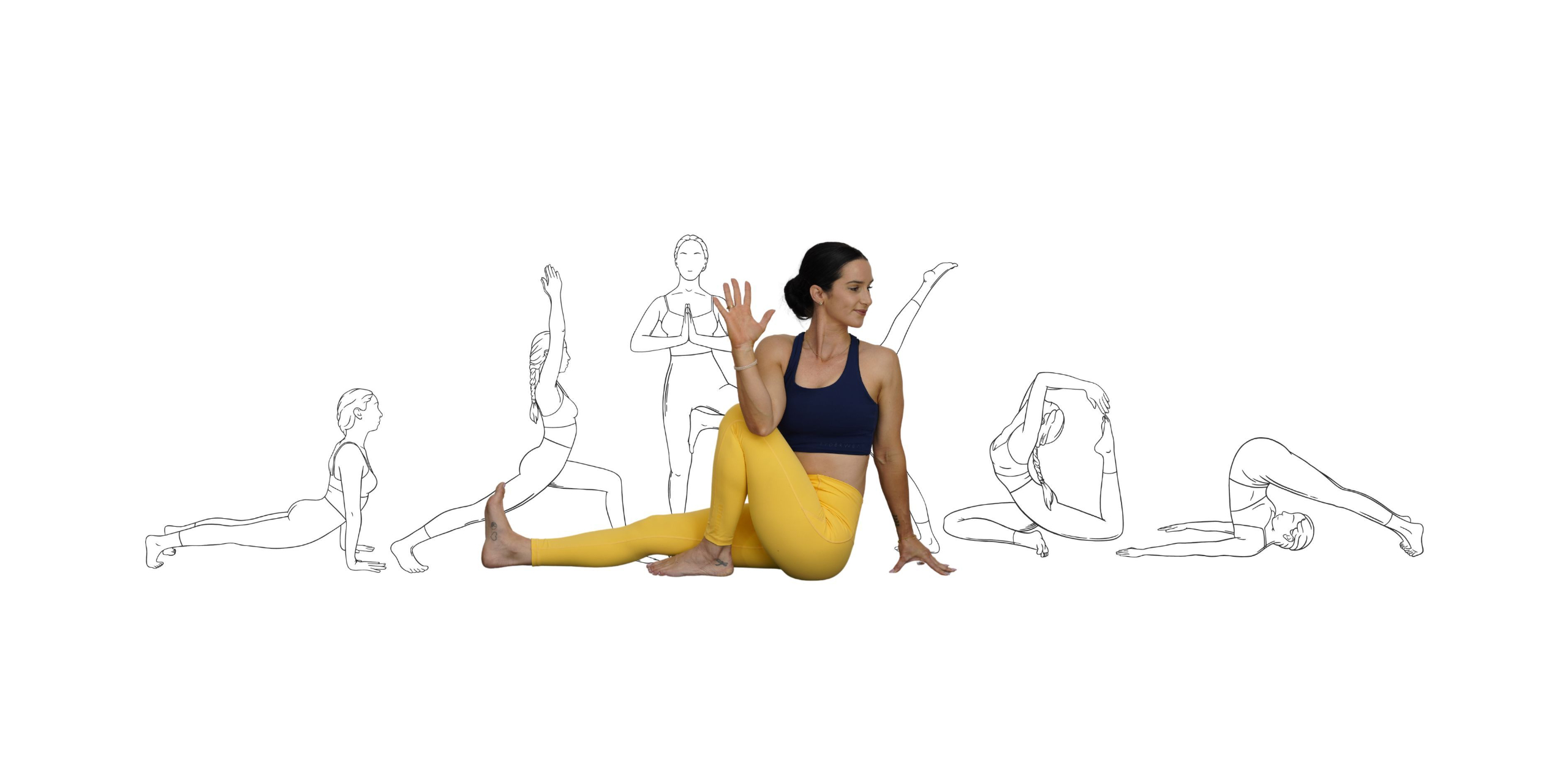
The physical practices of yoga were never intended as purely physical exercise. They are tools for regulating the body, breath and mind. For ADHD, the focus is less about intensity, and more so on practicing with steadiness and awareness. Practices such as:
- Grounding asana that build stability and body awareness
- Slow, rhythmic breathing to calm the nervous system
- Simple meditation practices that train attention gently over time
- Rather than forcing concentration, yoga develops the capacity for attention and
A more complete approach
This perspective does not replace medical care, rather it serves as an adjunct; a complimentary, supportive lifestyle framework.
Ayurveda and yoga offer a framework that supports the whole person, not just the symptoms, but the environment, habits and internal state that shape how attention functions day to day. When we stabilise the nervous system, regulate sensory input, and nourish the body, attention becomes something that can be supported and strengthened.
How do you know things are improving?
In Ayurveda and yoga, we don’t measure progress by perfection, but by a gradual return to balance. The shifts are often subtle at first, and become more apparent over time.
You might begin to notice that your mind feels a little less scattered. Thoughts are still there, but they don’t pull you in so many directions at once. There is a greater sense of space between stimulus and response.
Your nervous system begins to soften. You may feel less reactive, less overwhelmed by noise, pressure or stimulation, and more able to settle into your day.
Sleep often becomes more regular and restorative, which in turn supports mood, energy and focus throughout the day.
There can be a quiet improvement in your ability to follow through on simple tasks, through a growing sense of internal organisation and confidence.
Emotionally, there is often more stability. The highs and lows may begin to even out, replaced by a more consistent, grounded state.
You may also notice changes in your relationship with your body — more awareness, more care, and a stronger connection between how you live and how you feel.
Over time, this creates a felt sense of feeling more at home in your body.
Continue the journey
If this perspective resonates, there are a few ways to explore it further:
Join our upcoming live workshop: Ayurveda & Yoga for ADHD (this Saturday)
A practical, guided session with Dr Rafeena and Sami, exploring these principles in more depth, with tools you can begin applying immediately. More information and booking here.
Study Ayurvedic Wellness Coaching
Learn how to apply these principles professionally, supporting others with lifestyle, diet, nervous system regulation and holistic health. More information here.
Yoga Teacher Training
Deepen your understanding of yoga beyond asana, and learn how to work with the body, breath and mind in a therapeutic, meaningful way. More information here.