Functional Anatomy in Yoga: Why One Size Never Fits All
Jan 20, 2026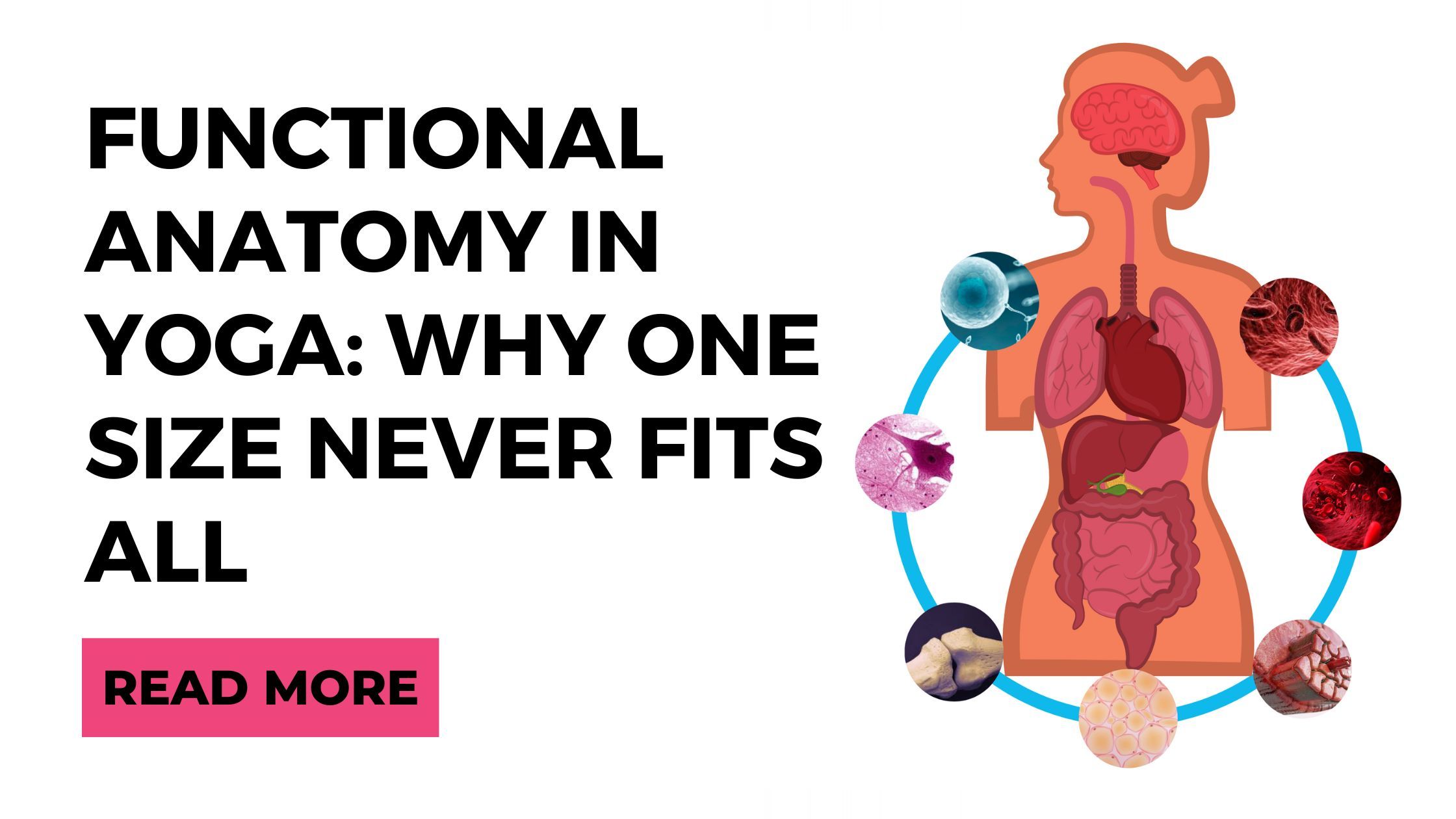
Yoga is often spoken about as a physical practice, but at its heart, the yoga system serves the whole person - body, mind, spirit, and the social and environmental context we live within. When we understand this, it becomes clear why functional anatomy in yoga is never about rigid rules or universal prescriptions.
“How Long Should You Hold a Stretch?” is one of the most common questions in yoga practice and the most honest answer is: it depends.
It depends on:
- the goal of the practice
- the current state of the body
- the person’s nervous system
- their lifestyle and stress levels
- how sedentary or active they are
- tissue quality and hydration
A short, gentle movement might be deeply therapeutic for one person, while another may benefit from longer, sustained loading. There is no single “correct” duration, only contextually appropriate choices.
In yoga culture, flexibility and end range of motion are often prioritised. But from a functional anatomy and therapeutic perspective, hydration, lubrication, and communication of cells and tissues via pranic coordination are often far more important than how far someone can stretch.
The majority of bodies don’t need more force or intensity.
They need:
- regular movement
- joint mobilisation
- improved tissue hydration
- nervous system regulation
In fact, some of the most effective therapeutic outcomes come not from pushing limits, but from restoring ease and responsiveness within the tissues.
Sitting, Sedentary Life & the Thixotropic Effect
You may have heard the phrase “sitting is the new smoking.” This is because our connective tissues are thixotropic, meaning they become more fluid and adaptable with movement, and more viscous and resistant when static. When we are sedentary, tissues lose resilience, glide, and elasticity.
In simple terms:
- movement = hydration and adaptability
- stillness (too much) = stiffness and fragility
This doesn’t mean intense workouts are required. Often, simple, regular movement is the most powerful intervention for tissue health.
Fascia: The Communication Network
Fascia is a thin connective tissue that surrounds and interweaves with every structure in the body - muscles, bones, organs, nerves, and blood vessels. It’s not just packaging; it’s a communication highway.
Within the fascial system, tissues slide, glide, and telescope over one another. This movement allows force transmission, responsiveness, and efficiency. When tissues are dry, dehydrated, or under chronic stress, this communication becomes restricted, often experienced as pain, stiffness, or reduced coordination.
This is why practices that support:
- hydration
- varied movement
- gentle deformation
- nervous system regulation
are so powerful, even when they appear simple.
The Nervous System: The Command Centre
The nervous system plays a central role in how we move, stretch, and respond to our environment. It governs communication between all bodily systems and strongly influences tissue tone.
Because connective tissue surrounds nerves, practices that affect fascia also affect nervous system health. Yoga asana, breathwork, rest, diet, hydration, and lifestyle choices all contribute to how safely and effectively the body can adapt.
Sometimes, limited range of motion isn’t a muscular issue at all > it’s a protective response from the nervous system.
Why Healing Is Never Linear
Even the most well-designed plan doesn’t guarantee results. Healing is influenced by countless variables, many of which are outside our control. Bodies are constantly adapting, circumstances change, and readiness for change varies from person to person.
This is why:
- different tissues require different strategies
- different people require different approaches
- group classes and one-on-one sessions look very different
Group classes offer a general, inclusive framework: “come as you are.”
One-on-one work allows for precision, adaptation, and therapeutic focus.
Both have value; neither replaces the other.
Structure Is Shared, Not Isolated
There are very few places in the body where bones directly touch. Almost all structures are wrapped in connective tissue, which creates tension, tone, elasticity, and integrity. Each tissue layer relies on the health of the others.Strength, flexibility, stability, and mobility are not separate goals, they are emergent properties of a well-communicating system.
A Simple Practical Exploration
To experience these principles directly, explore how different tools and movements affect your tissues and nervous system.
Try:
- Myofascial release balls under the feet
- Tennis balls under the thighs while seated on a chair
- Foam rolling the outer thigh / IT band area
- Supine hip rotations and gentle knee hugs
Move slowly. Notice changes in sensation, ease, and breath. Pay attention not just to what feels intense, but to what feels supportive of your current need.
Functional anatomy in yoga isn’t about perfect poses or fixed rules. It’s about understanding systems, respecting variability, and making intelligent, compassionate choices that serve the person in front of you (yourself included!).