Exploring Dancer Pose (Natarajasana)
Jul 22, 2026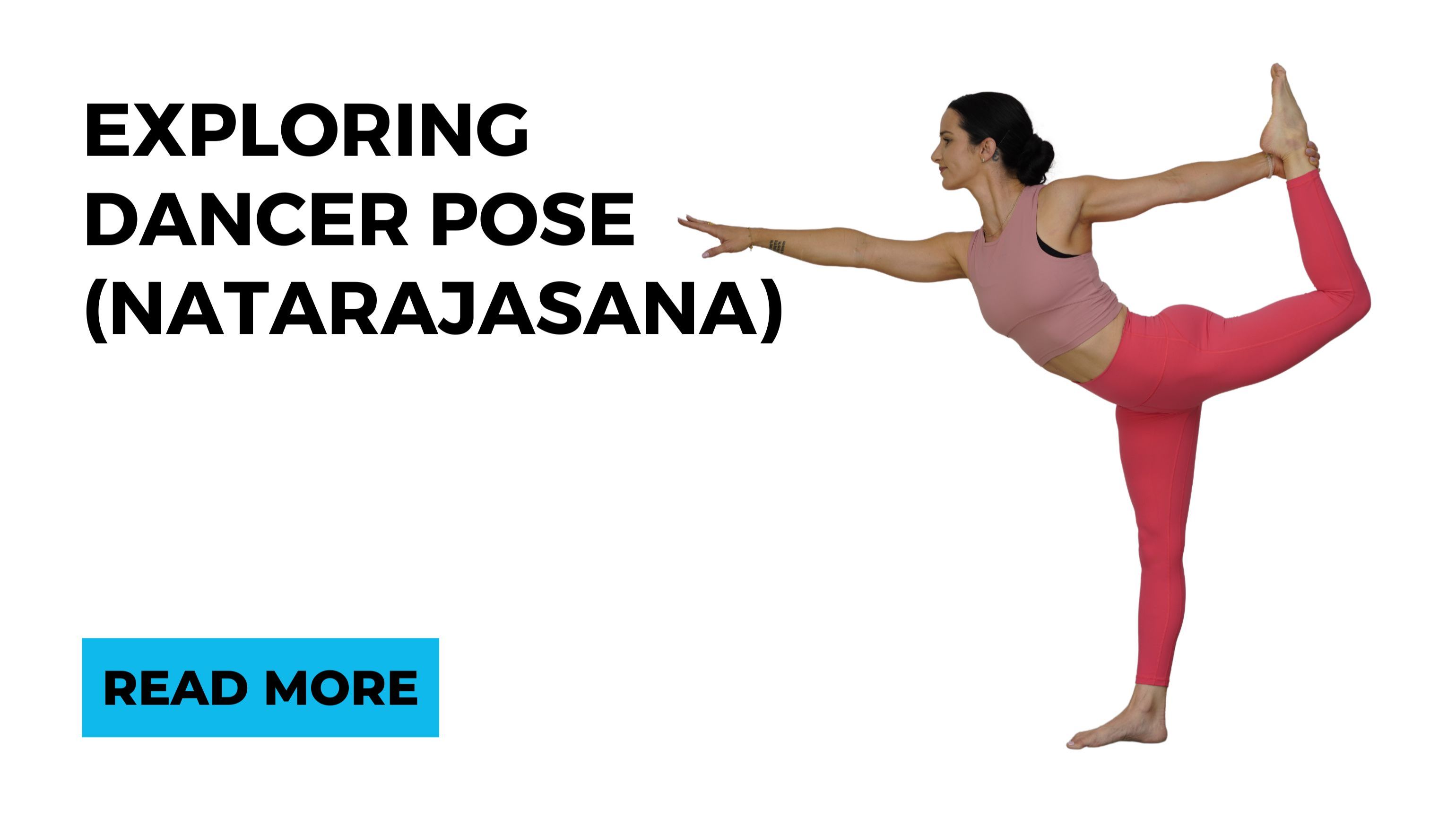
English Name: Dancer Pose
Sanskrit Name: Natarajasana (नटराजासन)
Naṭa (नट) – dancer
Rāja (राज) – king or lord
Āsana (आसन) – posture or seat
Natarajasana translates to Lord of the Dance Pose, referring to Lord Shiva as Nataraja.
Introduction to the Pose
Dancer Pose (Natarajasana) is a graceful standing balance that combines strength, flexibility, coordination, and concentration into a single posture. It challenges the practitioner to remain steady while the body moves into an increasingly dynamic shape, requiring equal measures of stability and mobility.
Although often admired for its aesthetic appearance, Dancer Pose is less about achieving the highest leg lift and more about developing balance, body awareness, and controlled spinal extension. It teaches students to coordinate strength through the standing leg and core with openness through the chest, shoulders, and hip flexors. As with many balancing postures, the process of learning the pose is often more valuable than the final expression.
Anatomical Focus
This asana strengthens the ankles, legs, gluteals, upper and lower back, and abdominals while stretching the chest, shoulders, hip flexors, and quadriceps. The standing leg develops balance and proprioception, while the lifted leg creates active hip extension and spinal extension. As the posture deepens, it also improves coordination between the upper and lower body.
Specific Special Unique Feature of the Pose
Dancer Pose is unique because it combines three movement patterns that are often trained separately: balance, backbending, and active hip extension. Rather than relying on flexibility alone, the pose requires active strength to create the shape. The practitioner must continually adjust through the standing foot, ankle, pelvis, and core, making it an excellent posture for developing proprioception and whole-body coordination.
Unlike passive backbends, Natarajasana asks the body to create spinal extension while remaining stable on a single leg, making it both physically and neurologically demanding.
Therapeutic Benefits
This asana strengthens the ankles, legs, gluteals, upper and lower back, and abdominals while stretching the chest and front body. It develops balance, coordination, and postural awareness, and can help counteract prolonged sitting by opening the hip flexors and chest. As a balancing posture, it also encourages concentration, body awareness, and mental focus.
Teaching & Practice Tips
Warm the body thoroughly with hip flexor stretches, quadriceps stretches, gentle backbends, and balance preparation before attempting this pose.
Encourage students to establish balance first before trying to lift the back leg higher.
Think of pressing the foot back into the hand rather than simply pulling the foot upward.
Maintain length through the front of the body and avoid collapsing into the lumbar spine.
Use a steady drishti (focal point) and smooth breathing to improve balance and stability.
Remember that height of the leg is less important than maintaining control, alignment, and ease throughout the posture.
Doshas (Balancing For)
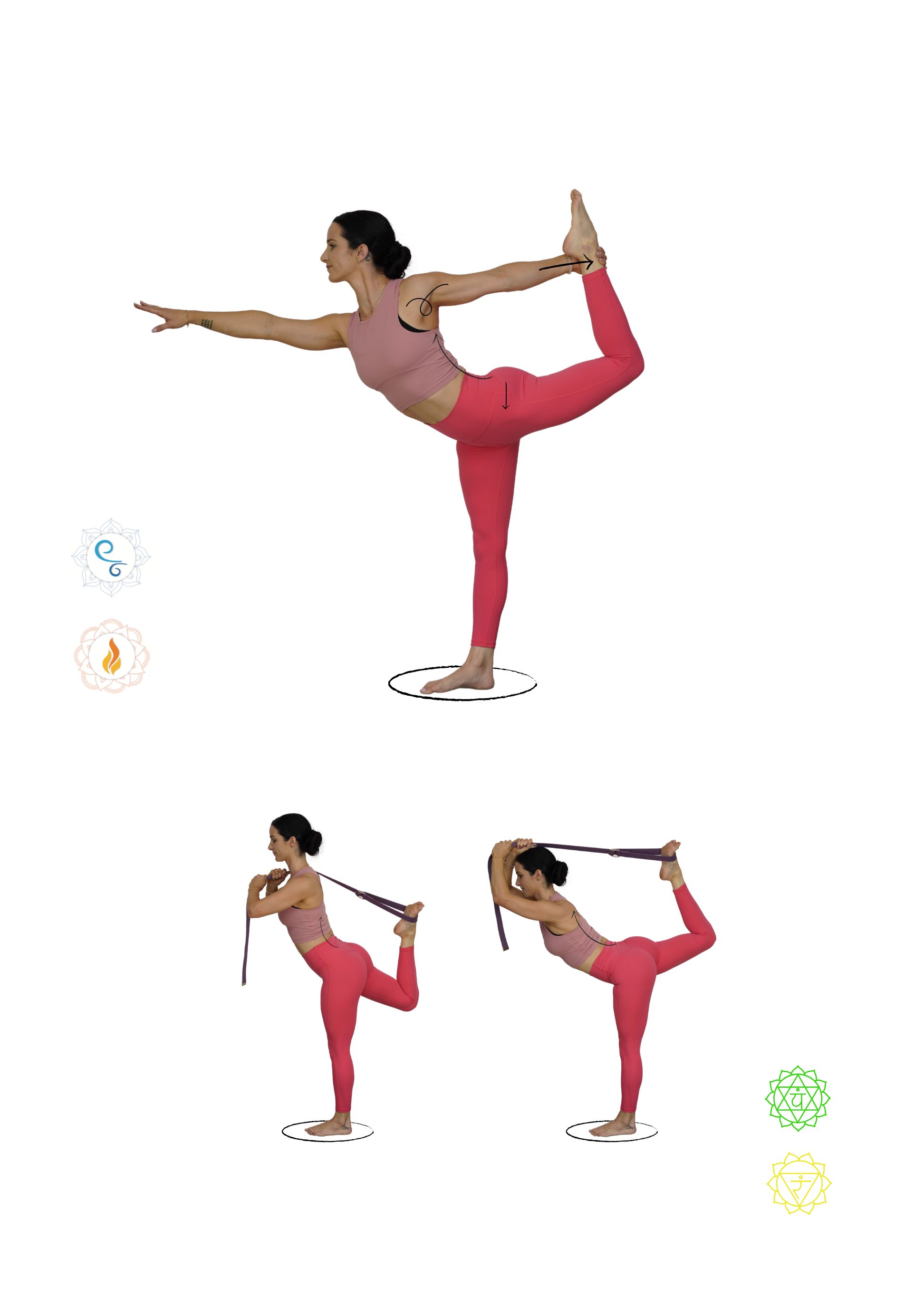
Vata – develops grounding, stability, and focus.
Pitta – encourages openness through the chest while balancing determination with steadiness.
Chakras Stimulated
Manipura (Solar Plexus Chakra) – confidence, determination, and personal power.
Anahata (Heart Chakra) – openness through the chest and emotional expansion.
Considerations
This asana requires significant balance and is best first attempted near a wall for safety. Students with ankle, knee, or hip injuries may need to avoid the posture or use modifications. The spinal extension may be unsuitable for students with back injuries, significant posterior chain weakness, or degenerative disc conditions.
Modifications
Practice beside a wall for balance support.
Begin with a standing quadriceps stretch before progressing to the full pose.
Use a yoga strap around the lifted foot if reaching the foot comfortably is not yet possible.
Keep one hand holding the foot while extending the opposite arm forward, rather than progressing to more advanced variations.
Sequencing Considerations
Natarajasana should be introduced only after the body is warm. Prepare students with gentle backbends, hip flexor and quadriceps stretches, standing balance postures, and core activation. It works well later in a standing sequence after poses such as Warrior I, Low Lunge, Crescent Lunge, and Tree Pose.
Variations
Single Arm Dancer
Leaning Dancer (free hand reaching towards the floor)
Mermaid Dancer
King Dancer Pose
How to Practice
- Begin standing tall at the top of your mat with your feet hip-width apart and your arms relaxed by your sides.
- Shift your weight into your left foot, grounding evenly through the heel, ball of the foot, and toes.
- Engage your core and gently lift through the crown of the head.
- Bend your right knee and bring your heel toward your buttocks.
- Reach back with your right hand and hold the inside of your right foot or ankle.
- Keep your knees close together as you establish your balance.
- Extend your left arm forward at shoulder height with the palm facing down.
- Begin pressing your right foot firmly into your hand as you slowly hinge your torso forward.
- Allow the back leg to lift naturally as the chest reaches forward, creating length through the entire body.
- Keep the standing leg active and avoid locking the knee.
- Maintain a broad chest and draw the shoulder blades gently together without compressing the lower back.
- Fix your gaze on a steady point in front of you and continue breathing slowly and evenly.
- Hold the pose for several breaths, maintaining strength through the standing leg and length through the spine.
- To release, slowly return the torso upright, lower the lifted leg with control, and return to Mountain Pose before repeating on the opposite side.
Start your Yoga & Ayurveda journey today! Deepen your practice, transform your life, and discover the joy of serving with our Yoga Teacher Training - fully online and self-paced, with live mentoring.